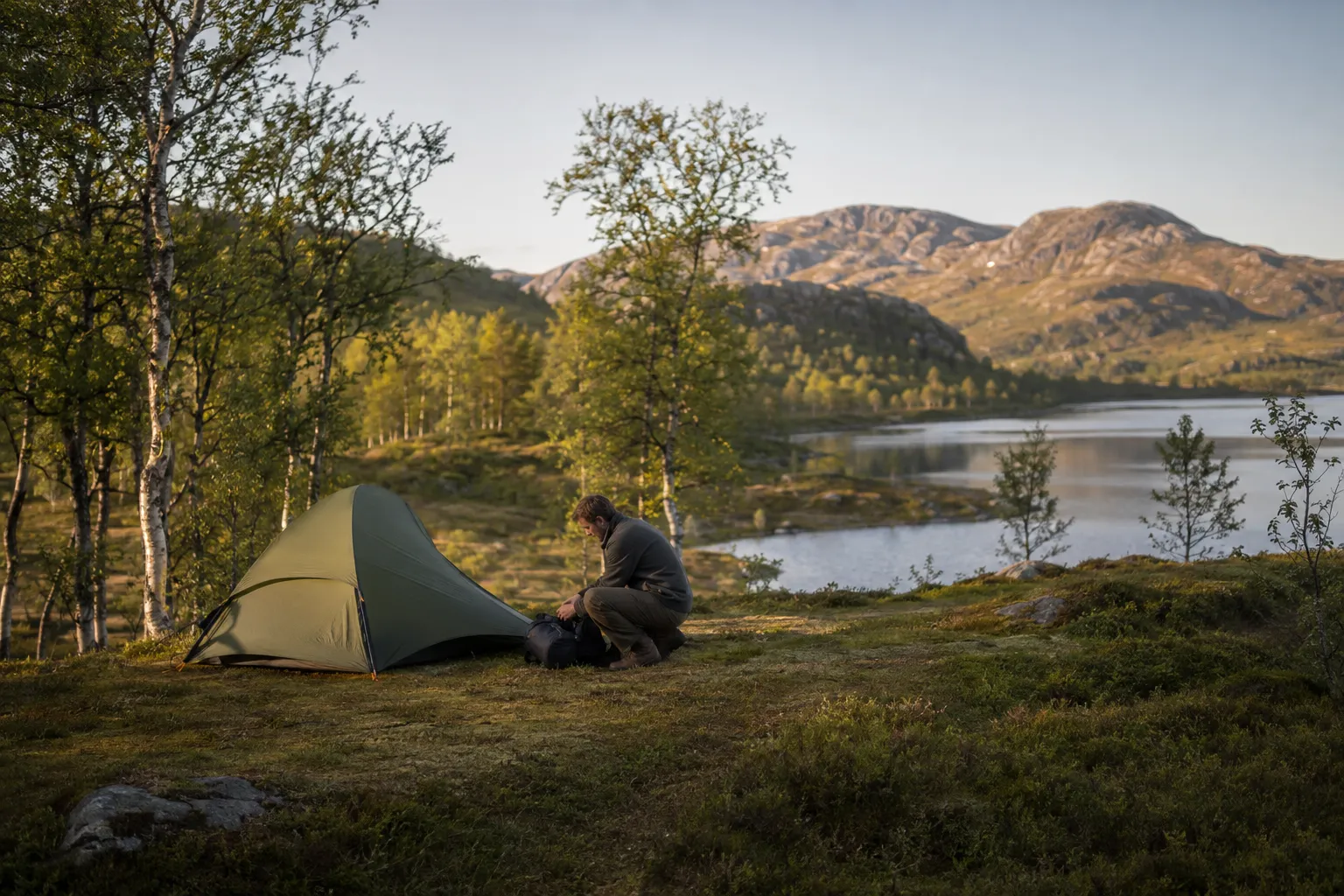
Norway’s allemannsretten gives everyone broad access to nature, regardless of who owns the land. It is not a permission to use every piece of ground in the same way. The central distinction is between utmark, uncultivated land where the right mainly applies, and innmark, such as gardens, house plots and cultivated fields.
The right and the duty travel together: move carefully, respect people and animals, and leave no trace.
Sources: Miljødirektoratet — allemannsretten; Miljødirektoratet — tent and hammock guide; Miljødirektoratet — Right to Roam English guide; DSB — forest fire and open fire ban.
Walking and resting in utmark
You may generally travel on foot or skis and stop for a rest in uncultivated countryside. You may pick berries, mushrooms and common wild flowers for personal use, subject to protected species, nature reserve rules and special local restrictions.
Cultivated land, gardens and the private area around homes are innmark. Do not cross a garden because it looks like a shortcut. Some paths and roads through cultivated land may be used, but the legal details and seasonal rules matter.
Motorised travel is not part of the right to roam. A campervan can use lawful roads and parking places, but driving into the terrain to camp is generally prohibited.
The 150 metre and two night camping rules
On uncultivated land, a tent or hammock must normally be at least 150 metres from the nearest inhabited house or cabin. In lowland areas, you may generally stay for up to two nights at the same place without the landowner’s permission.
Longer stays are allowed on high mountains or in remote areas far from buildings. Local regulations and protected area rules can restrict camping, so check the municipality or park authority before relying on the general rule.
Use established sites where practical. Avoid young forest, livestock, nesting birds, drinking water sources and ground that will be damaged by repeated use. Take all rubbish and food waste away.
Fire rules are stricter than many visitors expect
There is a general ban on campfires and barbecues in or near forests and other uncultivated land from 15 April to 15 September. An exception exists where it is obvious that fire cannot spread, but the person lighting it remains responsible.
Municipalities can impose stricter total bans during dry periods, including outside the usual dates. Check local fire information the same day. Never light a fire directly on bare rock, which can crack, and extinguish it completely before leaving. Report a forest fire to 110.
Water, fishing and protected areas
The right includes swimming and access along much of the coast. Saltwater fishing with hand tackle is generally open, while freshwater fishing normally requires a permit and special rules protect salmon, sea trout and Arctic char.
National parks and nature reserves remain open for responsible visits, but their protection regulations can limit camping, cycling, fires, collection or access at sensitive times.
The most useful Norwegian sentence is Vis hensyn: show consideration. If a legal right would still disturb residents, animals or fragile ground, choose another place. That judgement is the culture surrounding the rule, not an optional extra.